
Start Here
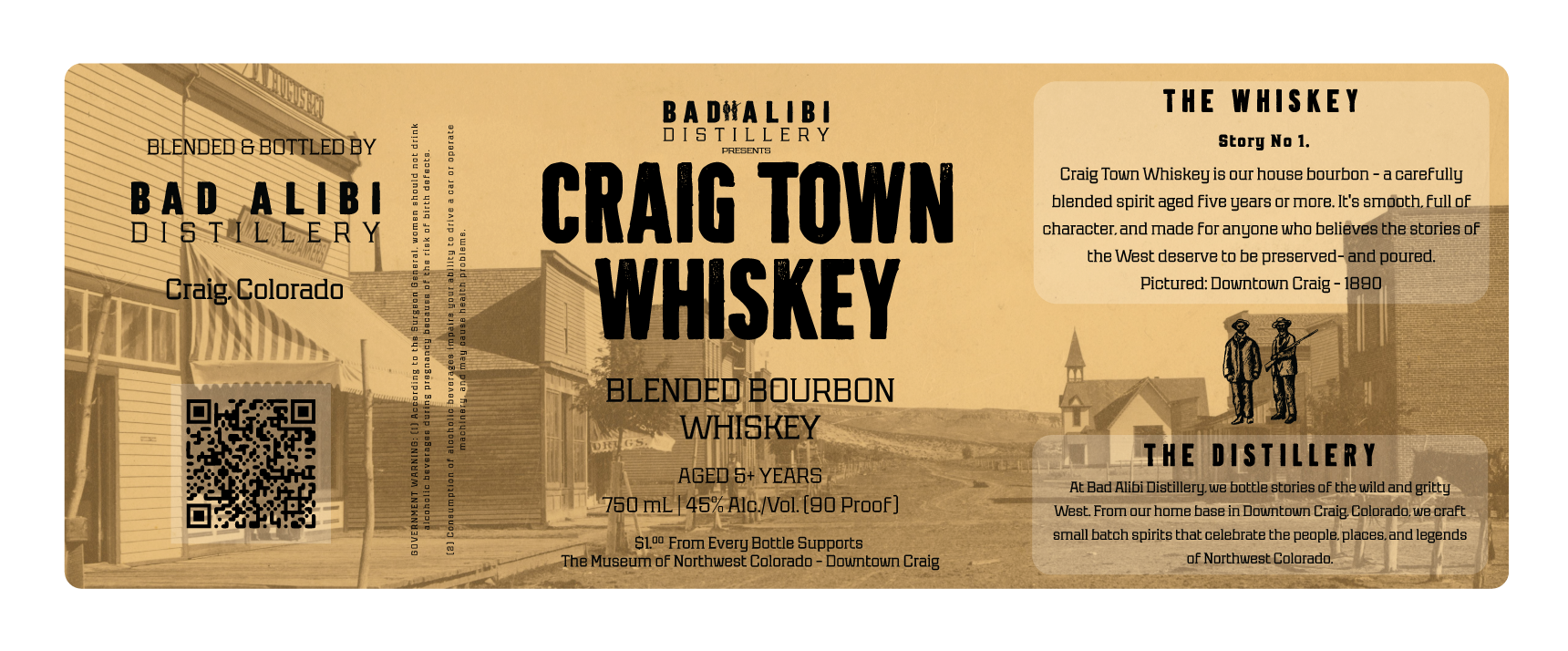
If you’re holding this bottle, you’re holding a piece of Craig.
If you’re holding this bottle, you’re holding a piece of Craig.
Not a postcard version.
Not a polished one.
The real thing, built by people who stayed when they could have left, worked when it was hard, and believed a town was worth shaping with their own hands. Craig Town Whiskey tells the story of how this place came to be, between 1890 and 1930, when Northwest Colorado was still defining itself and Craig was just beginning to matter.
The stories will continue to take shape, take a moment.
Scroll slowly.
This story is meant to be read the way it was lived.
And when visiting Craig, please take a moment to visit The Museum of Northwest Colorado - Downtown Craig, where the stories are really told. Each bottle of Craig Town Whiskey sold donates $1.00 back to the museum.
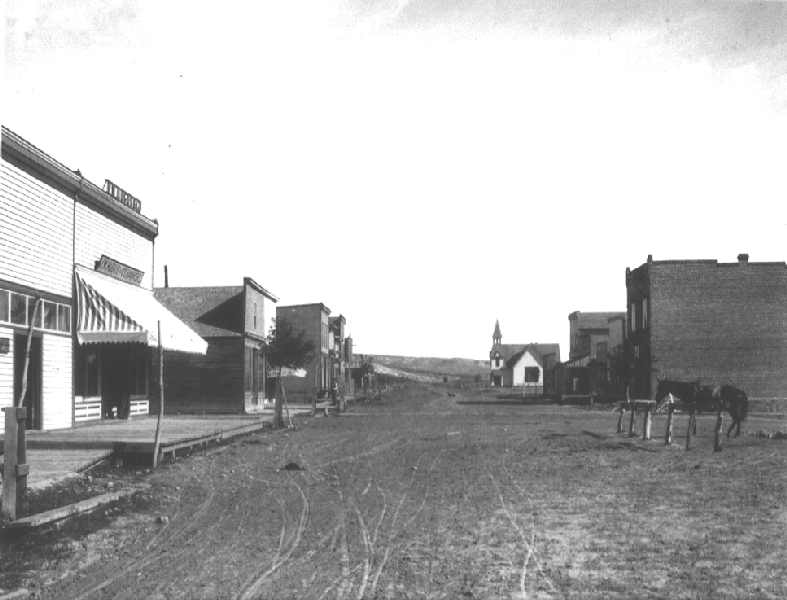
Photo of Craig 1890 - which is now a painting that can be seen in the Moffat County Court House. Photo Courtesy of The Museum of Northwest Colorado - Downtown Craig
About the Characters
Dummy and Crane
Long before they became illustrations on a bottle, Dummy and Crane were names spoken out loud in Northwest Colorado—written into records, repeated in newspapers, and passed quietly through stories told long after the men themselves were gone.
They were not famous in the way legends are famous. They were known because they were present.
Crane and “Dummy” Wilson appear again and again in early regional accounts, particularly those tied to Routt County and the greater Yampa Valley. Their names surface alongside ranchers, lawmen, outlaws, and settlers—the kinds of people who shaped frontier communities not by grand speeches, but by doing what needed to be done.
Dummy Wilson earned his nickname because he was deaf, not because he lacked intelligence or agency. In early frontier records, “dummy” was a crude but commonly used descriptor for deaf individuals, reflecting the language of the time rather than the person himself. Despite that limitation, Wilson built a life and reputation in Northwest Colorado, working as a taxidermist—a trade that required patience, precision, and deep familiarity with the land and its wildlife.
Taxidermy mattered in the frontier West. It was tied to hunting, ranching, education, and recordkeeping. Specimens preserved by early taxidermists became teaching tools, displays of regional identity, and sometimes the only visual record of wildlife that defined a place.
Crane, often mentioned alongside Wilson, was part of the same orbit—a man known locally, tied to early settlement-era commerce and daily life. Together, their names show up not because they sought attention, but because they were woven into the routines of a growing region.
They lived in a time when Northwest Colorado was still figuring itself out. Law was present, but loose. Boundaries—geographic and social—were still being drawn. People were known by what they contributed and how they showed up, not by polish or pedigree.
What makes Dummy and Crane endure is not that they were exceptional, but that they were representative.
They were the kind of men who populated early Craig and the surrounding country: tradespeople, craftsmen, observers of daily life. People who stayed long enough for their names to stick.
When Bad Alibi Distillery chose Dummy and Crane as the faces on the bottle, it wasn’t about glorifying the past or reenacting it. It was about acknowledging the countless individuals whose names still echo faintly through Northwest Colorado’s records—people who helped define the character of this place simply by being part of it.
Dummy and Crane remind us that history isn’t only made by the well-known. It’s made by the people whose names appear once, then again, then linger—until they become inseparable from the story of a place.
Their presence on the bottle is an invitation to look closer, to ask questions, and to recognize that Craig’s history belongs not just to the loudest figures, but to the steady ones.
The ones who stayed.
The ones who worked.
The ones whose names never quite disappeared.
Craig Town Whiskey
Craig, Colorado | 1890–1930
Craig didn’t begin with a grand plan. It began the way most real towns do—quietly, unevenly, and without certainty that it would last.
Long before the town had a name, the Yampa Valley was already known. Indigenous peoples, including the Ute, moved through this country for generations, understanding its seasons, its open grasslands, and the hard winters that shaped life here. When settlers arrived in the late 1800s, they didn’t come because it was easy. They came because there was room to work, land to run cattle, and space to build something of their own.
Life in Northwest Colorado at the turn of the century was defined by distance. Supplies took time. News traveled slowly. Winters tested both livestock and people. Communities formed not around convenience, but necessity. If you wanted something to exist—a store, a school, a place to gather—you helped build it.
Everything changed when the railroad came through.
In 1906, the Denver & Salt Lake Railroad pushed west into the Yampa Valley, and with it came permanence. Tracks meant connection to the rest of the state. They meant cattle could move to market, goods could arrive more reliably, and families could put down roots knowing they weren’t entirely cut off from the world. Almost overnight, a townsite formed around the rails.
The town was named Craig, after William Bayard Craig, a railroad official whose name became attached to a place that would outgrow its origins. By 1907, Craig wasn’t just a stop on a line—it was becoming the commercial center of Northwest Colorado.
What followed wasn’t flashy. It was steady.
Craig grew one business at a time. Blacksmiths set up shop. Livery stables housed teams that worked the surrounding ranches. Hotels, saloons, newspapers, banks, and general stores appeared, built by people who intended to stay. Saloons weren’t just places to drink; they were where information moved, deals were made, and arguments were settled. If you wanted to know what was happening in the valley, you listened closely and stayed awhile.
By the 1910s, Craig had established itself as a working town—serving ranchers, travelers, and neighboring communities. It was practical, unpolished, and deeply tied to the land around it. The people here didn’t talk much about legacy, but they lived it every day.
Then came Prohibition.
When the country outlawed alcohol in 1920, it didn’t erase drinking in Northwest Colorado. It just made it quieter. Stories passed down through families still talk about bottles moving discreetly, homemade spirits tucked away, and the kind of quiet defiance that thrives in places far from oversight. Craig wasn’t interested in spectacle—it was interested in continuity. People adapted, as they always had.
By the late 1920s, Craig had weathered isolation, economic shifts, and the growing pains of becoming a real town. Schools had been built. Civic groups had formed. Businesses passed from one generation to the next. Craig wasn’t finished becoming, but it was no longer temporary.
It was a town that had decided to stay.
Craig Town Whiskey exists to honor that choice.
This whiskey isn’t about nostalgia or mythmaking. It’s about the people who built something without knowing how long it would last, who showed up every day and did the work anyway. It reflects a place shaped by resilience rather than romance, where progress came slowly and honestly.
When you pour this whiskey, you’re not just tasting a spirit—you’re stepping into a story that began over a century ago and is still being written. A story of rails and ranches, of quiet determination, of a town that chose to endure.
Craig didn’t need to be loud to matter.
It never has.
Sources and Bibliography
This story was developed using primary archival materials, oral histories, and published historical research related to the founding and early development of Craig, Colorado, and the greater Yampa Valley. We are proud to reference and support the institutions that preserve and share Northwest Colorado’s history.
Primary Sources
Museum of Northwest Colorado Archives, Craig, Colorado
Moffat County Historical Society Records
Early editions of the Craig Empire and regional newspapers
Secondary Sources
Fitzpatrick, V.S., Last Frontier: A History of Early Routt County
Colorado Encyclopedia entries on Craig and Moffat County
Colorado State Archives, Railroad Expansion and Settlement Records
Oral histories collected by the Museum of Northwest Colorado
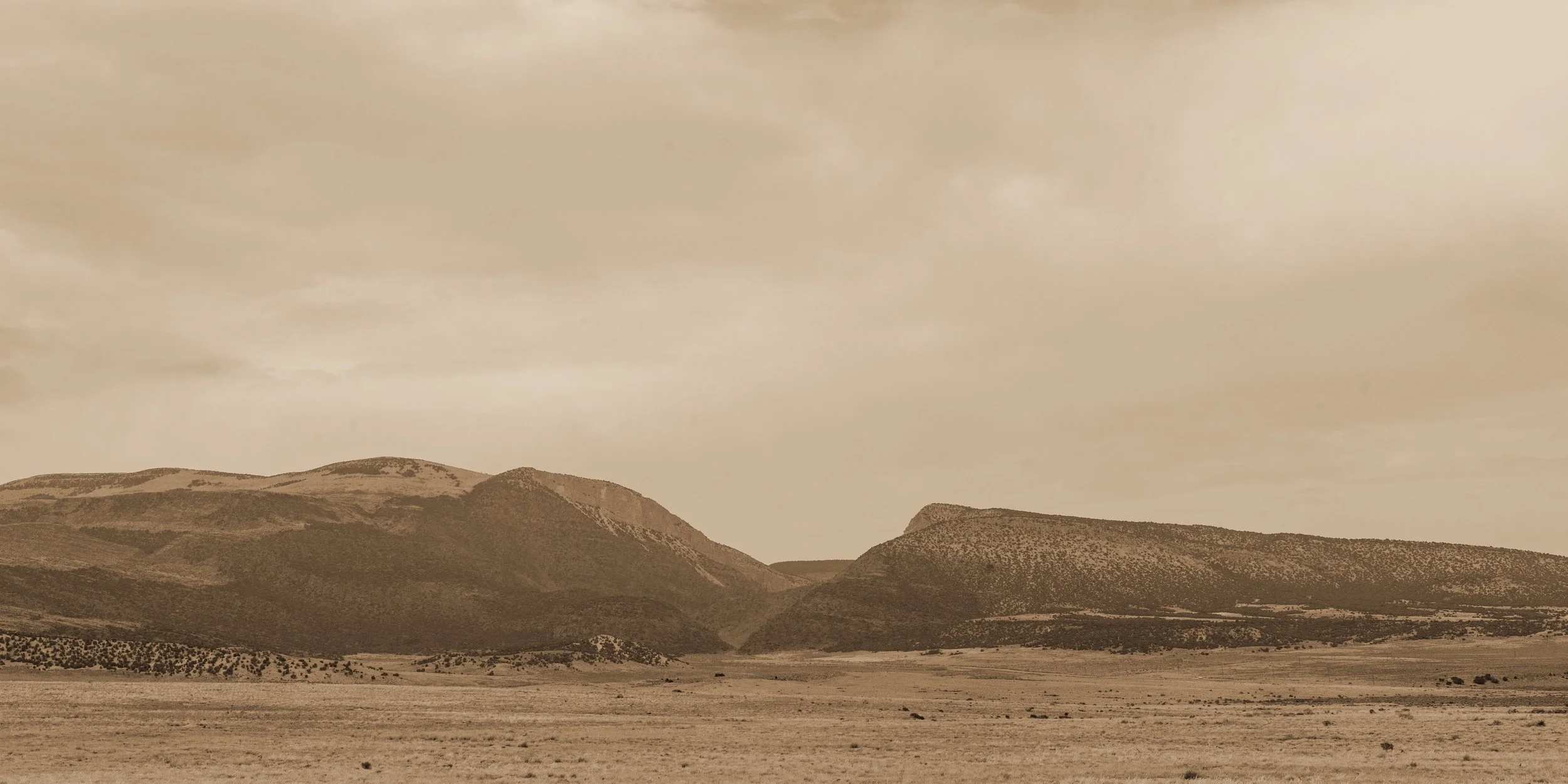
Every bottle sold $1.00 goes to the Museum of Northwest Colorado - Downtown Craig
We couldn’t tell the stories without them