
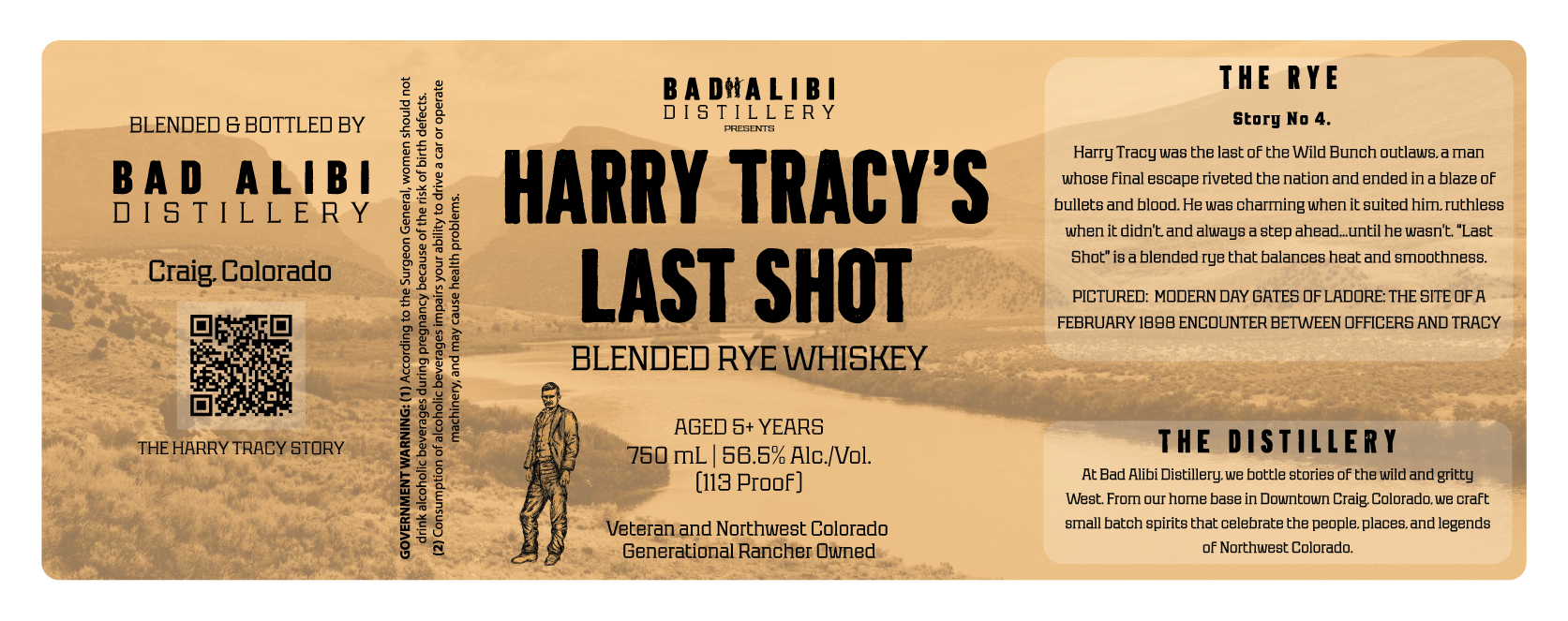
Story Number 4
The most underrated outlaw in the west
Sources & Bibliography
This narrative is based on historical research and interpretation published by the Museum of Northwest Colorado, with supplemental regional context from archival and newspaper sources.
Primary Source
Museum of Northwest Colorado
Harry Tracy: The Most Underrated Outlaw by Far
https://museumnwco.org/harry-tracy-the-most-underrated-outlaw-by-far/
Secondary & Contextual Sources
Colorado Historic Newspapers Collection
Digitized frontier-era newspaper coverage documenting outlaw activity, manhunts, and public response.
https://www.coloradohistoricnewspapers.org/
Colorado Encyclopedia
Entries on frontier crime, law enforcement, and the closing years of the American West.
https://coloradoencyclopedia.org/
Historical Note
Dates, locations, and events referenced here reflect current historical understanding as documented by the Museum of Northwest Colorado and corroborated by regional archival sources.
Brown’s Park to the Pacific Northwest,
1897–1902
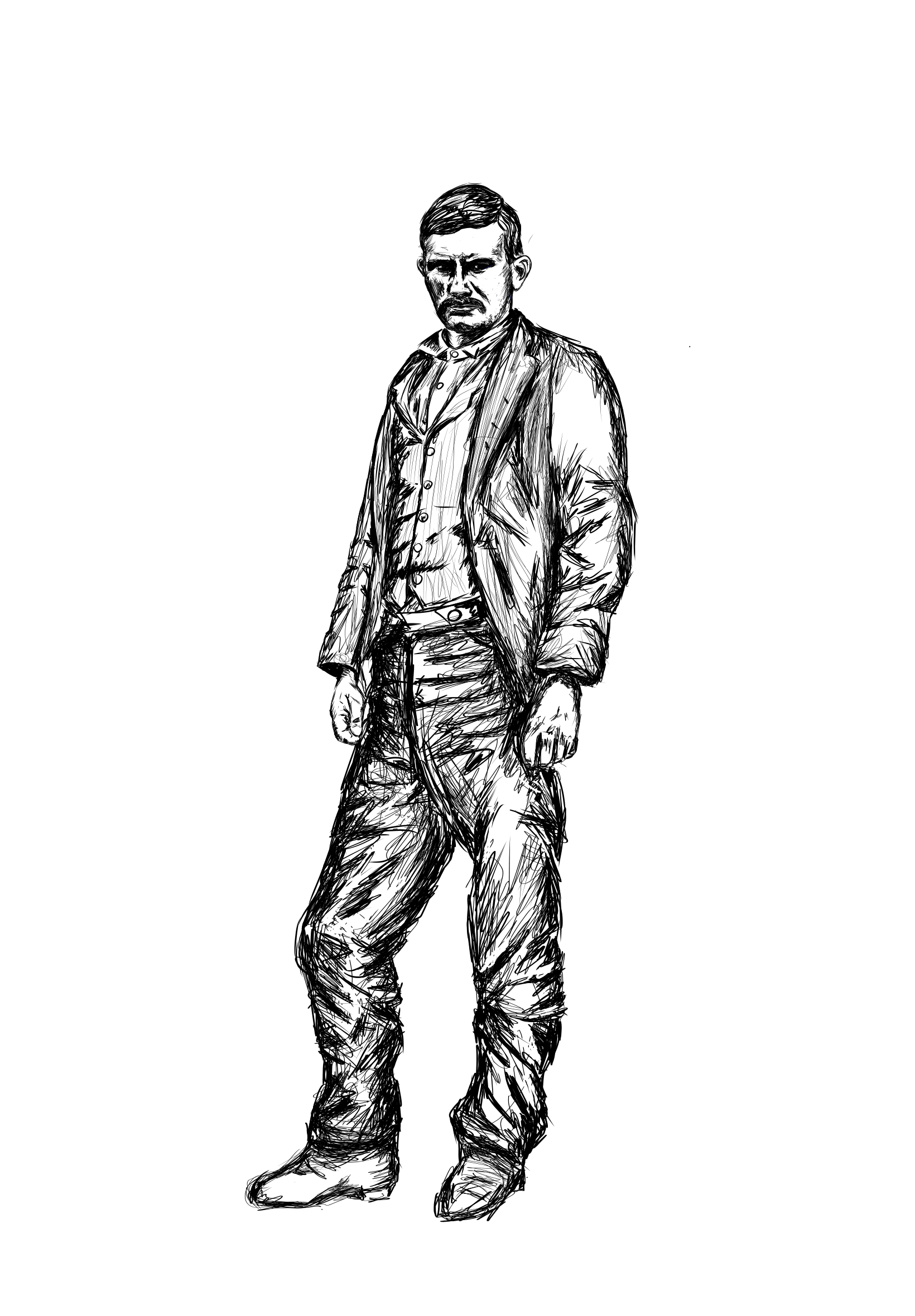
Why Harry Tracy is not remembered as the most notorious outlaw of the American West is difficult to explain. His story, when laid out plainly, reads like fiction, yet every part of it is documented. Escape followed by murder. Capture followed by escape. Prison walls scaled under gunfire. Posses outmatched again and again by a man who seemed to survive situations no one else could.
Harry Tracy was not part of the Wild Bunch, despite being occasionally grouped there in later retellings. He didn’t operate within a network or ride with a crew. His story stands on its own, and it is stranger for it.
In 1897, Tracy escaped from the Utah State Penitentiary after somehow acquiring a .45 Colt revolver while incarcerated a detail that still raises questions more than a century later. That same revolver would follow him through the most violent chapters of his life. In 1898, Tracy surfaced in Brown’s Park, Colorado, a remote stretch of country that now lies within Moffat County. There, during a confrontation with a local posse, Tracy killed Valentine Hoy. The killing marked his first known murder and set off a pattern that would define the rest of his life: Tracy did not surrender, and he did not hesitate.
Captured later that year, Tracy was held at the Routt County Jail in Hahns Peak. He lasted two weeks. During that time, he overpowered the sheriff, beat him, locked him inside a cell, and walked out. He was recaptured the following day near Steamboat Springs and transferred to the Pitkin County Jail in Aspen, where authorities believed distance and stronger security would finally hold him.
It didn’t.
A few months later, Tracy escaped again and vanished west, eventually making his way through Oregon and Washington. By 1901, he had been arrested after a string of burglaries and sent to the Oregon State Penitentiary. What followed the next year would cement his reputation permanently.
In 1902, Tracy and an accomplice executed one of the most audacious prison escapes in American history. Armed and cornered, they seized a ladder and took a prison guard hostage, using him as a human shield as they walked into the prison courtyard. Gunfire erupted from the guard towers. Bullets rained down. Somehow, Tracy and his accomplice scaled the wall and escaped….killing six men in the process.
By then, Harry Tracy was no longer just an outlaw. He was a national sensation.
Newspapers tracked his movements obsessively. Posses formed quickly wherever he appeared. What made Tracy different, and more dangerous, was that he didn’t attempt to disappear. Instead, he stayed in the Oregon and Washington area and openly told people who he was. This brazen confidence repeatedly drew lawmen straight to him, only for them to watch him fight his way out of situations that should have ended his story. More than once, Tracy found himself cornered with no apparent escape, only to shoot his way free.
Eventually, the pattern broke.
After months on the run, Tracy was seriously wounded and surrounded in a Washington field. There was no exit left to force, no crowd to scatter, no wall to climb. Rather than surrender, Harry Tracy took his own life, ending a story that had already defied every reasonable expectation.
The .45 Colt revolver taken from Tracy in Brown’s Park in 1898, believed to be the same weapon used in his prison escapes and killings, remains one of the most tangible artifacts of his life. It is not dramatic on its own. It doesn’t need to be. Its weight is carried by the story attached to it.
Harry Tracy Rye is built in that same spirit.
This is not a whiskey meant to romanticize violence or glorify crime. It exists to acknowledge a chapter of Western history that refuses to be simplified, a man who didn’t fit the mold, didn’t ride with a gang, and didn’t slow down when the West began to close in around him.
Some stories survive because they’re neat.
Harry Tracy’s survives because it isn’t.